The Tech Interview Behind the Scenes: Ivan Kadiev
By Steff D — Published · Updated
The Tech Interview Behind the Scenes is an HRLabs series.
Let’s take a look behind the scenes of the technical interview process from the interviewers' perspective.
Our goal is to provide candidates with valuable tips and recommendations directly from professionals who conduct interviews for various technical roles.
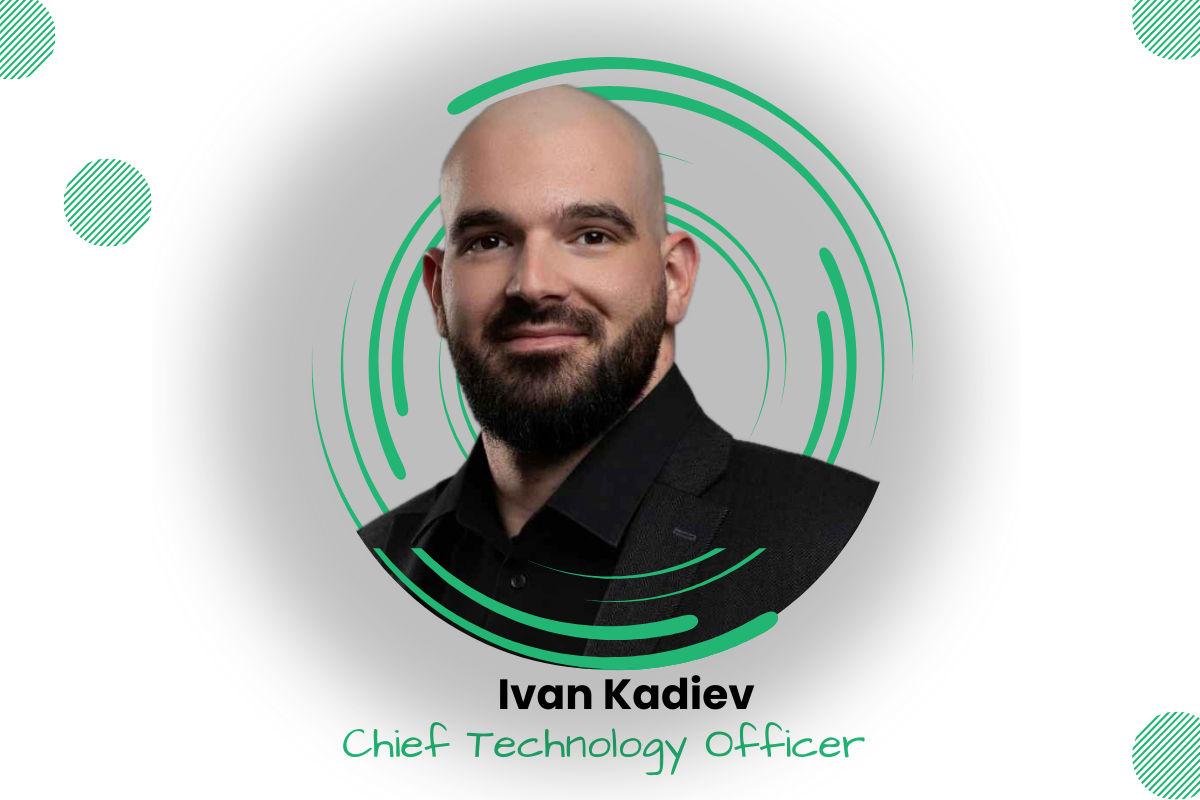
“The most important skills are the ability to think and to adapt.", shares Ivan Kadiev, Chief Technology Officer at Cyberware.
Tell us more about your career path.
I started out with freelance software projects, taking on different kinds of work to build experience and understand what I enjoyed most.
When COVID hit, I had to find a full-time position, so I treated job hunting like a full-time job in itself. I was searching and applying from 9 to 5 every day. I will never forget that I sent over 300 applications and, to this day, only one company replied, which is the one I ultimately joined. From there, I worked at multiple companies, including US-based ones, as a full-stack software developer and architect, and over time that path led me to my current role as a CTO.
As a candidate, have you had any strange interviews? What about interviews that impressed you?
I have passed most of the interviews I have attended, and the majority were fairly standard and not particularly challenging.
The strangest interview I had was with an international company that clearly was not interested in hiring me at all. The interviewer was in a rush, not in the mood, and asked around ten very rapid questions, all in the form of “What is some-acronym?”.
I said I did not recall what all the acronyms stood for and asked if they could say the full names, because I might know them that way. They refused, ended the interview quickly, and told me I was not suitable for the job. Afterward, I checked and found out that I actually knew almost all of them.
The best interview I ever had was with a software architect.
As an emerging architect myself at the time, they recognized that and decided to drop all the prepared live coding and boilerplate questions. Instead, they asked me what I had implemented in terms of software architecture in my previous work. We had a very meaningful and deeply technical conversation and I was genuinely given the opportunity to showcase my knowledge and experience in depth. Because of that, I was able to really impress them. I will never forget that interview.
What skills and qualities do you look for in a candidate? How can a candidate stand out during the interview?
The most important skills are the ability to think and to adapt.
Programming languages, frameworks, and technologies can always be learned, but drive, passion, and loyalty cannot.
A candidate stands out when these qualities are clearly visible. They need to convey genuine curiosity, ownership, and the willingness to grow rather than just listing buzzwords such as HashMap.
What questions do you typically ask in technical interviews? Do you have specific tasks or problems that you often use to assess candidates?
Each interview is different.
There is usually the same starting point, but from there the conversation can go in many directions depending on the candidate. The questions, tasks, and depth all adapt to their background, experience, and how they approach the discussion.
How important are good communication skills for a candidate? How do they impact the overall interview?
Good communication skills are at least as important as technical skills.
Without the ability to communicate clearly, it is very hard to convey your ideas, your reasoning, and your work. Communication affects everything from how you explain past projects to how you collaborate with a team in real life.
How important is cultural fit when making a hiring decision? How do you assess whether a candidate will fit well into the team?
Cultural fit is important.
Every company has its own culture and values, and candidates are evaluated in that context. The goal is to see whether a person’s attitudes, expectations, and way of working align with how the team and company operate.
What are the most common mistakes candidates make during an interview? What advice would you give candidates on how to prepare for an interview?
Lately, a very common mistake is relying too much on AI, regardless of whether the candidate is trying to hide it or is openly using it.
It becomes obvious when we receive overly complicated and overly detailed answers to very simple questions. In an interview, we want you to think and analyse in real time, not just read or repeat something generated elsewhere. Preparation should focus on understanding concepts, practicing problem-solving, and being ready to explain your own thinking.
What advice would you give to candidates who want to improve their technical skills? Are there any resources you would recommend?
Today there are endless resources if you want to learn: online courses, online documentation, AI tools, and many others.
However, the most important factor is real experience.
Just start working on something you are genuinely interested in, and you will naturally encounter problems along the way. Those problems are your real learning opportunities.
Share more about the best (or worst) interviews you've conducted.
The worst interviews are always the ones where the candidate simply does not show up or the ones where they join but barely talk during the entire conversation.
There is very little you can do in those situations.
The best interviews are when a candidate manages to make me question or think more deeply about a certain topic or even if they can somehow challenge me. Those interviews are rare, but they are truly wholesome and memorable.
How do you evaluate a candidate during an interview—based solely on their theoretical knowledge, or is their approach to solving a problem/task more important to you? What other factors do you consider when making a decision?
The approach to solving a problem is much more important than pure theoretical knowledge. Theory can always be improved over time, but curiosity and genuine interest in understanding things cannot.
How someone reasons about an unfamiliar problem tells a lot more than whether they remember a definition.
What would you like candidates to know about the interview process in your company? What could be helpful for them in their preparation?
For technical roles, if I am the interviewer, it is honestly hard to prepare in a traditional sense.
Either you have already developed the reasoning and problem-solving skills or you have not. Of course, you can review fundamentals, but the key is how you think, not how many questions you can memorise.
Share a funny story from your experience as an interviewer 😊
It actually happened to me to interview a candidate, who joined wearing a formal shirt on top, but shorts on the bottom.
In the middle of the interview, they had to stand up for a moment and had completely forgotten about their outfit choice. It was extremely hard not to smile or laugh when that happened and to stay composed and continue being professional until the end of the interview.