The Tech Interview Behind the Scenes: Hristina Nedyalkova
By Steff D — Published · Updated
The Tech Interview Behind the Scenes is an HRLabs series.
Let’s take a look behind the scenes of the technical interview process from the interviewers' perspective.
Our goal is to provide candidates with valuable tips and recommendations directly from professionals who conduct interviews for various technical roles.
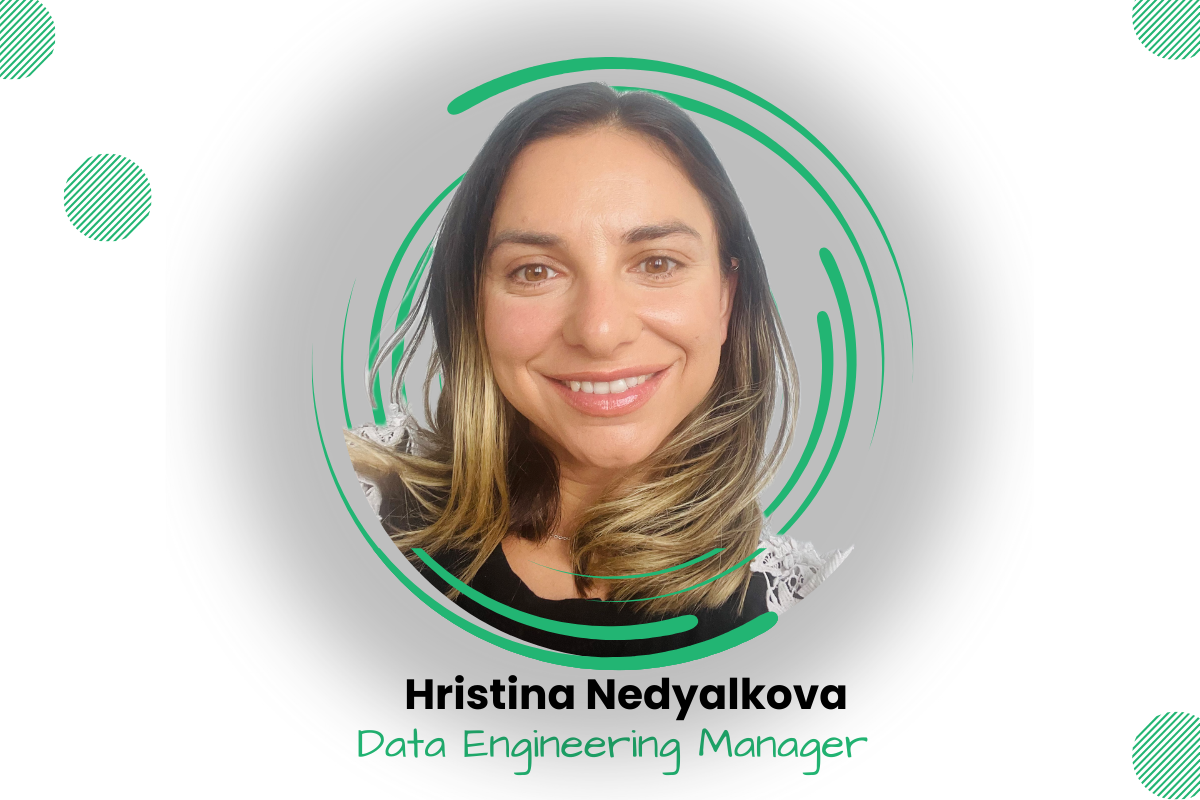
“I don't expect perfect answers.", shares Hristina Nedyalkova, Data Engineering Manager at Microblink.
Tell us more about your career path.
I started out studying Business Administration in the American College of Thessaloniki with the highest possible scholarship. My teachers quickly recognized my strong skills in math and helped me switch to a Computer Science major. In my third year, I moved to a less common Business and Computing major that combined the best of both worlds.
After graduating, I returned to Bulgaria and landed several positions in both computer science and business. The role that resonated with me most back then was an Automation Quality Assurance Engineer, as I have a natural talent for finding everything that isn't working - both in life and in code.
I moved through senior roles until a pivotal change occurred when I was hired at Hyperscience. That's where I entered the world of Machine Learning, where I work to this day, as part of Microblink’s team.
As a candidate, have you had any strange interviews? What about interviews that impressed you?
I’ve had both horrible and awesome interviews, and I’ve used all those experiences to build a great interview process for my own hires.
The strangest interviews I’ve had were with clearly inexperienced interviewers who made me feel awkward because they didn't know how to guide the conversation.
The most impressive ones were the interviews truly designed to see my core and unique capabilities. They hired me for more than just my work-related skills, but also for the culture I would bring to the company, always striving for high standards and the best possible outcome for the team.
What skills and qualities do you look for in a candidate? How can a candidate stand out during the interview?
I look for honesty, curiosity and the drive to be better.
I truly believe that personal development and a strong culture aren't just things you show at work - they're values you live by every day with your friends and family. A candidate who stands out to me is someone who is open to honest conversations and is always willing to change and adapt.
What questions do you typically ask in technical interviews? Do you have specific tasks or problems that you often use to assess candidates?
I always prepare a specific task connected to the core capabilities of the role.
For a quality-focused position, the task would be to spot certain quality characteristics in a project and see how deeply you dive into the details.
For system design, I'd want to see a general understanding of best practices and modern technology stacks.
While this approach might not be extraordinary, what I'm truly looking for is honesty.
I don't expect perfect answers. If you lack experience in a certain area, please say so - it allows us to focus on different topics and assess you in the most effective way possible.
How important are good communication skills for a candidate? How do they impact the overall interview?
In my opinion, communication skills are critical for every human being, not just for work but in life. Even as an individual contributor or a freelancer, you'll need to communicate with a certain number of people. The better your communication, the easier all your next steps will be.
It's important to be able to clearly state your tasks and explain them both in writing and verbally. It’s equally vital to know how to listen effectively - without interrupting, but also without prolonging your answers. The truth is, it’s all about finding the right balance.
How important is cultural fit when making a hiring decision? How do you assess whether a candidate will fit well into the team?
Cultural fit is incredibly important, as it's the foundation for everything else.
I see it as a reflection of the values and behaviors that make a team successful. It's not about hiring people who are all the same, but about finding candidates who share core principles like honesty, curiosity, and a drive for personal development.
A candidate's ability to communicate openly, take responsibility for mistakes, and contribute positively to the team's atmosphere is just as important as their technical skills.
After all, you can teach a person a new technical skill, but it's much harder to change their core values.
What are the most common mistakes candidates make during an interview? What advice would you give candidates on how to prepare for an interview?
The most common mistake is a lack of preparation and motivation.
It's clear when a candidate is attending an interview simply because a recruiter called them, without having researched the role or the company. This lack of genuine interest wastes everyone's time.
Another frequent mistake is poor communication, which shows up in a few ways:
What advice would you give to candidates who want to improve their technical skills? Are there any resources you would recommend?
To candidates looking to improve their technical skills, my advice is to first find an area that genuinely interests you.
When learning and growth aren't a burden, it becomes a natural part of your routine.
Once you have that passion, experiment with different tech stacks and stay current with the latest trends by following platforms and blogs. Most importantly, find real problems in your company or industry that need a solution, and then challenge yourself to solve them. As you work through these challenges, seek out the best minds in the field - whether through courses, blog posts, or online communities - to guide your process and help you refine your skills.
How do you evaluate a candidate during an interview—based solely on their theoretical knowledge, or is their approach to solving a problem/task more important to you? What other factors do you consider when making a decision?
Solving a problem is far more important than their theoretical knowledge alone.
I can teach someone new technical skills, but it's much harder to teach them how to think. I’m looking for how you break down a complex problem into smaller, manageable steps - that's a core skill.
Ultimately, I want to see the person behind the resume - someone who can collaborate, learn, and contribute positively to the team.
What would you like candidates to know about the interview process in your company? What could be helpful for them in their preparation?
What I'd like candidates to know is that we strive for a smooth process designed to evaluate you in the best way possible.
Depending on the role, the process usually involves a few stages.
You can expect to meet with the hiring manager and leadership to assess cultural fit and discuss your career path. There will also be one or two technical assessments, with the number depending on the seniority of the position.
Our goal is to give you a clear and fair opportunity to showcase your skills and to ensure we're the right fit for you, just as much as you are for us.
Share a funny story from your experience as an interviewer 😊
I have a story that still makes me smile.
We were using a supermarket receipt for a task and one candidate claimed they had never seen a receipt and had no idea what information was on it. Given that receipts are a part of daily life in Bulgaria, my colleagues and I just stared at each other, wondering if this was a joke. Was it possible that a grown person had never seen a receipt?
The candidate seemed really nervous, so we immediately tried to put them at ease.
We started explaining what a receipt was, and as we say in Bulgarian, we jumped into their shoes. Later in the interview, they finally laughed and admitted it was a total mental block due to nerves. They thanked us for creating such a fun and open environment, which ultimately allowed their true personality and capabilities to shine.
It was a great reminder that sometimes, the best way to evaluate someone is just to help them relax and be themselves.