The Tech Interview Behind the Scenes: Dimitar Grozdanov
By Steff D — Published · Updated
The Tech Interview Behind the Scenes is an HRLabs series.
Let’s take a look behind the scenes of the technical interview process from the interviewers' perspective.
Our goal is to provide candidates with valuable tips and recommendations directly from professionals who conduct interviews for various technical roles.
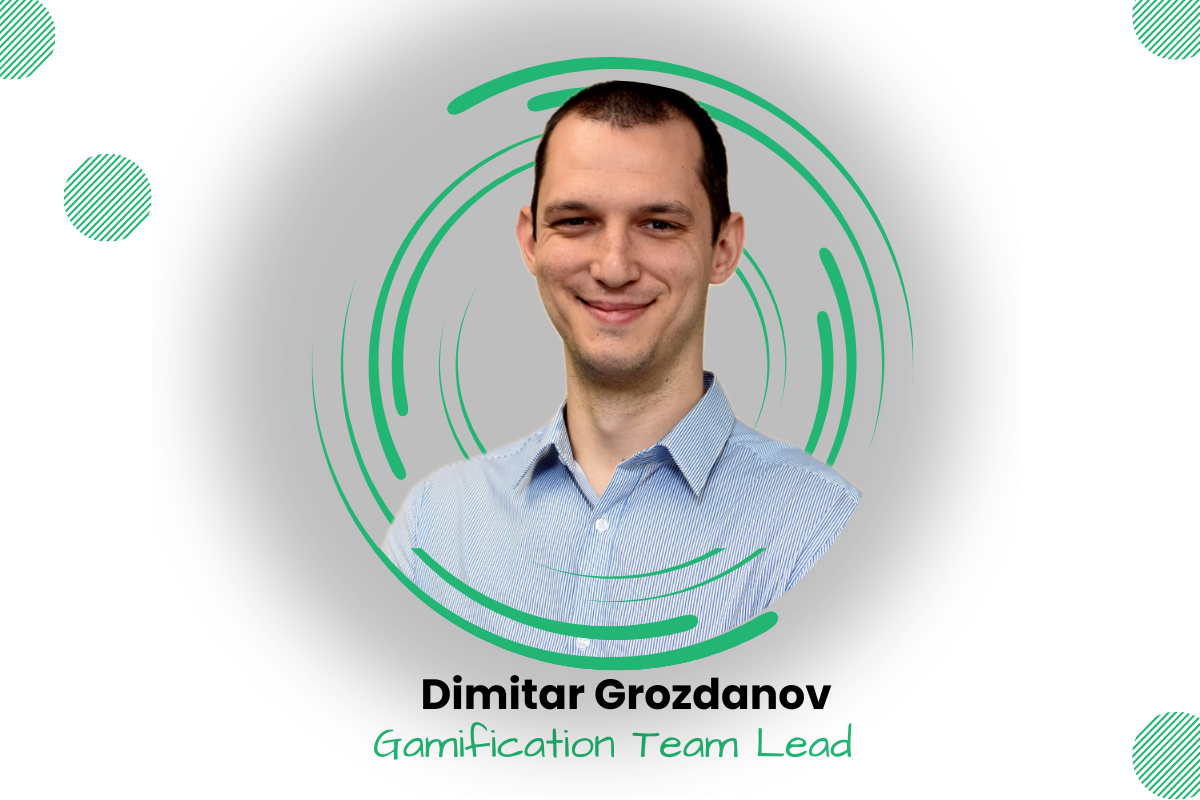
“Being late is always a big red flag.", shares Dimitar Grozdanov, Gamification Team Lead at EGT Digital.
Tell us more about your career path.
I have graduated with Business, Finance and Economics from The University of Manchester but when I returned to Bulgaria, I was struck by the banking system.
That made me look for something else and I started Telerik Academy in 2019. From then on in my last job I started as a mid developer in 2022, only to be promoted a year later to a Team Lead.
As a candidate, have you had any strange interviews? What about interviews that impressed you?
I have interviewed a musician who was a very nice fellow to have a beer with but he was not suitable to be a programmer.
What skills and qualities do you look for in a candidate? How can a candidate stand out during the interview?
I am impressed by candidates who have a quench for knowledge. I am also impressed if they have questions, because that shows that they are interested.
What questions do you typically ask in technical interviews? Do you have specific tasks or problems that you often use to assess candidates?
You have 25 horses in a competition. You can only put 5 horses to run at a time and the result is their order, there is no indication of time.
The goal is to find the three of the fastest horses with minimal races.
How important are good communication skills for a candidate? How do they impact the overall interview?
Good communication skills are essential.
We start with understanding the question, answering it in a concise manner.
How important is cultural fit when making a hiring decision? How do you assess whether a candidate will fit well into the team?
I ask questions such as:
"What you did not like in your previous job?"
" What did you like the most?"
" If there is one thing that you can change, what would that be?"
What are the most common mistakes candidates make during an interview? What advice would you give candidates on how to prepare for an interview?
Being late is always a big red flag.
What advice would you give to candidates who want to improve their technical skills? Are there any resources you would recommend?
My advice and what helped me, was solving problems at HackerRank. Also creating a project on GitHub to showcase your knowledge is a great starting point.
Prepare for theoretical questions - even the most basic ones as well.
Share more about the best (or worst) interviews you've conducted.
The worst interview I have conducted was when a candidate was out of a job for 2 months and he was not prepared at all.
I asked him around 20 questions from different areas and he answered only 2 of them. His salary was very low - as an intern, but there was not much to work with.
How do you evaluate a candidate during an interview—based solely on their theoretical knowledge, or is their approach to solving a problem/task more important to you? What other factors do you consider when making a decision?
I evaluate the candidate motivation first of all.
I also like to start with myself and our team to break the ice as we are usually two leads and one manager and it can be intimidating.
I ask a lot of technical questions and when candidates tell me about their previous experience, I ask questions to gain more understanding.
What would you like candidates to know about the interview process in your company? What could be helpful for them in their preparation?
I would say: prepare your theory, solve some coding exercises and create an exciting project on GitHub.
Share a funny story from your experience as an interviewer 😊
There was one candidate who applied for a senior. He was studying in Salford in Manchester and he had 5 years of experience.
I always start with the basic questions first and then I ask harder questions. He was not able to meet the mid level criteria but he asked me during the interview:
"What do you think I can do better to be successful next time?"
I laughed but I was impressed by his courageous question. I gave him honest feedback on what he was missing.